Sarah, Rob and Harry attended the annual Bird Observatories Council meeting at BTO headquarters, The Nunnery, in Thetford. Following a packed programme of presentations and discussion, here’s what Harry took away from the weekend.

10 February 2026
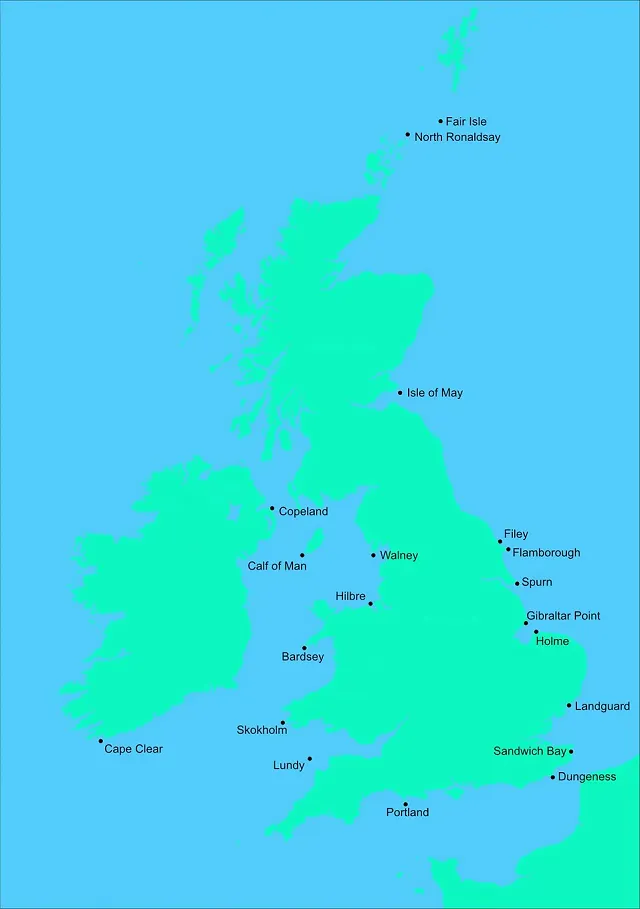
On 7th February, myself, Obs Chair Sarah Harris and Obs Manager Rob Hunton gathered with representatives from most of the UK’s other Bird Observatories for the 56th Bird Observatories Council Annual General Meeting. With the fast-paced and localised nature of observatory recording, hospitality and public engagement, it’s a great opportunity to appreciate the bigger picture that it all contributes to, alongside fellow staff, volunteers and ringers who, at any other time of year, couldn’t be further apart, while also laying the foundations for future recording and projects.
Through the day, representatives from each of the observatories present shared some of their highs, lows and findings from 2025. We highlighted the success of the year’s Little Terns at Beacon Ponds, the fantastic work of the seasonal volunteers, and in particular the collation of point counts and the installation of an ATLAS tower in the Obs garden.
Having enjoyed a productive year for Hoopoe, Cape Clear had the honour of the first Red-rumped Swallow ringed in Ireland, alongside a surplus of Humpback Whale and Orca sightings, increasing interest in other wildlife in the immediate area. The creation of new ponds at Sandwich Bay was soon rewarded with the first Scarce Blue-tailed Damselflies for Kent, and Bardsey continued to prove very popular with the Young Bird Observatory Visitor Programme (YBOV), which since 2013 has welcomed 150 successful applicants across all accredited observatories under the BOC banner. This scheme has helped many young birders up to the age of 24 to refine their ID skills and get to grips with standardised recording and ringing.
For Lundy, however, this was a momentous day, with a unanimous agreement across the room for their observatory to be awarded accreditation. They have proven to be an extremely popular site, with a two-year waiting list for visitors, continue to closely study the genetics and movements of the island’s remote House Sparrow population and, fortunately for its shorebird colonies, have remained rat-free for over 20 years. We congratulate them on this much-deserved award and look forward to seeing their future findings and successes.
There were also updates on MOTUS tagging and the tracking of trans-Palearctic vagrants. Unfortunately, while MOTUS has given success in tracking various migrants across the North Sea and beyond, numerous “false positives”, questionable readings and other malfunctions have led to a temporary hiatus in the project’s services, which will hopefully be resolved in the near future. More positively, genetic sampling and subsequent tracking of Yellow-browed Warblers has pinned west-flying birds to areas around the centre of their Siberian range, more eastern in origin than previously thought.
After the day’s discussions, we rounded things off with a fantastic dinner at The Raj in Thetford town centre. The weekend also offered some cross-country birding during our commutes both north and south, with a collective total of over 80 species between us. The suburbs of Thetford produced Kingfisher, Grey Wagtail, Egyptian Geese and the would-be Spurn mega of two Nuthatches, while the long-staying Eastern Black Redstart continued to delight at Sheringham, and Grafham Water offered passing appearances from Caspian Gull and Raven.
We’d like to thank both the Bird Observatories Council for their continued support of our observatory, and the BTO for hosting the event and for their ongoing support and collaboration with the Bird Observatories Council. It was a fruitful weekend of discussions, socialising and, above all, appreciating what brings us together: the birds!
You can find out more about each observatory by clicking on the links below, or you can visit the Bird Observatories Council website here - https://www.birdobscouncil.org.uk/